REVIEWR
AI photo critique

AI photo critique that explains every score

Upload a photo and get six weighted category scores on a 1.0–10.0 scale, written strengths and fixes, and a personalized action plan — in under a minute.

2 free critiques every day, plus free daily and weekly quests. No subscription required.

Or browse real critiques from the community
No credit card required Free Critique — no signup GDPR compliant

Start free

REVIEWR is free to use: every account gets 2 fresh critiques every day, resetting at midnight UTC without stacking. Daily and weekly quest entries are free too and do not use those credits. No subscription or payment method is required. Optional purchases are available for additional allowances.

Feedback you can act on

REVIEWR grades every photo against a published rubric — six weighted categories scored 1.0–10.0 with fixed anchor descriptors and genre-aware weighting — then explains the visible choices behind the scores and compares linked revisions.

How the critique works

01

Upload and pick a level

JPG, PNG or WebP at full resolution, nothing cropped. Beginner, Intermediate or Pro sets the bar you are judged against.

02

Six categories, weighted by genre

Each category is scored 1.0–10.0 against fixed anchor descriptors, then weighted for the genre the photo belongs to.

03

Written reasoning, not just a number

Strengths, specific fixes, your biggest win, and a personalized action plan.

In detail, every critique follows the same six steps. Here is exactly what happens between your upload and the written analysis.

  1. 1

    Upload a photo

    JPEG, PNG, WebP or HEIC. Nothing is cropped — the critique sees the frame exactly as you made it.

  2. 2

    Pick a critique level

    Beginner, Intermediate or Pro. The level sets the bar you are graded against and how many improvements each category surfaces — Pro is stricter on purpose.

  3. 3

    Get six weighted scores

    Each category is graded 1.0–10.0 against fixed anchor descriptors, then combined using genre-aware weights into one overall score.

  4. 4

    Read the written analysis

    Strengths, specific fixes, your biggest win, and a focus category with specific improvement suggestions.

  5. 5

    Ask a follow-up question

    Every critique includes a free follow-up, so you can ask why a category scored the way it did instead of guessing at the reasoning.

  6. 6

    Re-critique and measure

    Shoot or edit again, resubmit, and see the per-category delta. Improvement becomes a number instead of a feeling.

A full critique, exactly as you receive it

Pick a photo to read its complete critique: all six category scores with their reasoning, what works, what to improve, the action plan and the inspiration line.

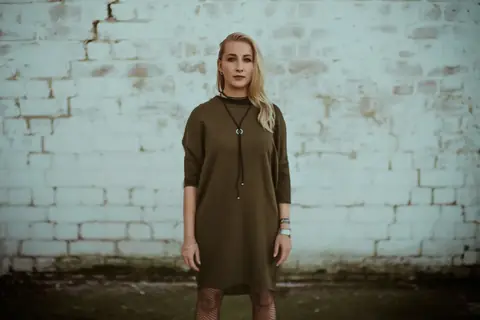
Urban Stoic
5.0/ 10

Urban Stoic

Pro

This portrait establishes a clear, moody atmosphere through its desaturated palette and textured background. However, the framing choices and flat lighting limit the impact of the subject's strong, direct gaze.

Category scores

🖼️Composition4.8

✓Center placement establishes a formal, static symmetry.

→The frame cuts the subject awkwardly at the lower thighs/knees.

→Excessive headroom leaves the upper third of the image empty and unbalanced.

→The dark crack in the upper left wall pulls the eye away from the subject.

💡Lighting5.2

✓The light is soft and even, avoiding harsh, unflattering shadows.

→The flat direction of the light lacks shaping, making the face appear two-dimensional.

→There is no edge or rim light to separate the subject's dark clothing from the background.

🎨Color & Tone5.4

✓The desaturated grading creates a coherent, moody aesthetic.

→A strong cyan/green cast affects the entire image, making the skin tones appear unhealthy.

→The whites in the brick wall are muddy and lack clean highlights.

✨Creativity4.5

✓The styling and location choice work well together to create an urban vibe.

→The straight-on pose against a brick wall is a very conventional portrait concept.

→The static posture lacks dynamic energy or a unique authorial perspective.

📖Story & Mood5.5

✓The stoic expression and muted tones successfully convey a detached, serious atmosphere.

→The mood relies heavily on the color grading rather than a genuine moment or narrative tension.

⚙️Technical Quality4.8

✓Focus is adequately placed on the subject's face.

→A heavy, artificial-looking vignette darkens the corners distractingly.

→The image lacks crisp micro-contrast, feeling slightly soft overall.

✦ What works

  • •The subject's direct, unwavering gaze creates a strong point of connection with the viewer.
  • •The textured brick wall provides a fitting, gritty backdrop that complements the wardrobe styling.
  • •The muted, desaturated color palette establishes a consistent, melancholic mood.

What to improve

  • →The bottom edge cuts awkwardly across the subject's legs, creating visual tension.
  • →Flat, frontal lighting fails to sculpt the facial features or provide separation from the background.
  • →Excessive negative space above the head diminishes the subject's scale within the frame.
  • →A pervasive cyan/green color cast muddies the whites of the wall and renders the skin tones lifeless.

Your action plan

  1. 1Crop the image tighter (e.g., to a 4:5 ratio) to remove the awkward leg cut and reduce the excessive headroom.
  2. 2Adjust the white balance to remove the green cast and warm up the skin tones.
  3. 3Reduce the intensity of the vignette to make it less distracting.

Need some inspiration?

Your style reminds me of...

Anton Corbijn — Corbijn is a master of gritty, moody portraits. Study how he uses contrast, framing, and subtle subject direction to create compelling images even in simple environments.

What AI photo critique actually is

AI photo critique means a model evaluates a photograph against a defined set of photographic criteria and explains its reasoning in writing. The useful version is not a score generator — it is a rubric. Without one, a model flatters whatever it is shown and every photo lands in the same narrow band.

REVIEWR grades against a published rubric with fixed anchor descriptors for each score band, so an 8.4 means the same thing on Monday as it does on Friday, and on your photo as on someone else's. The weighting adapts to the genre you shot — a portrait is judged harder on lighting, a product shot on technical control — but the six categories, and the descriptors behind them, never move.

A score generator vs. a REVIEWR critique

Plenty of tools will judge a photo. The difference is whether you learn anything from it.

A score generator

  • What you receive

    A score, and nothing that explains it.

  • The standard

    Hidden — you cannot tell what the model rewarded.

  • Skill level

    One bar for everyone, usually flattering.

  • What to do next

    Nothing actionable.

  • Progress

    No way to tell whether you improved.

  • Cost

    Often freemium with the critique behind a paywall.

REVIEWR

  • What you receive

    Six category scores, each with written strengths, a specific fix and the reasoning behind the number.

  • The standard

    A published rubric with fixed anchor descriptors per score band, so judgements can be checked.

  • Skill level

    Beginner, Intermediate or Pro — the same photo is held to the standard you asked for.

  • What to do next

    A personalized action plan with improvement and editing suggestions, plus a free follow-up question.

  • Progress

    Re-critique the new version and read the per-category delta.

  • Cost

    2 free critiques every day, plus free daily and weekly quest entries that do not use your daily allowance. No subscription required.

The six categories being critiqued

Every critique scores these six categories from 1.0 to 10.0 and combines them with the default weights below. Weighting shifts by genre — portraits lean harder on lighting, for example — but the categories never change.

Composition20%
Framing, balance, leading lines, subject placement, and what the edges of the frame do to the eye.
Lighting20%
Direction, quality and shaping of light, exposure decisions, contrast, highlight and shadow control.
Creativity20%
Originality of the idea, the strength of the visual decision, and whether the picture takes a risk that pays off.
Color & Tone15%
Colour harmony, white balance, saturation discipline, and how the tonal treatment supports the subject.
Story & Mood15%
Emotional read, atmosphere, moment, and whether the viewer understands what the photo is about.
Technical Quality10%
Focus and sharpness, noise, artefacts, lens handling, and the cleanliness of the capture and edit.

Critiques are meant to be repeated

A single critique tells you where a photo stands. The value comes from the second one: apply the fix, resubmit, and the per-category delta shows whether the change worked. Want the reasoning category by category, each with a drill? Read the category guides.

Frequently asked questions

How does AI photo critique work?

You upload a photo and choose a critique level. The model detects the genre, scores six categories — composition, lighting, creativity, colour and tone, story and mood, technical quality — from 1.0 to 10.0 against fixed anchor descriptors, and combines them with genre-aware weights into one overall score. Every number comes with written reasoning: what worked, what did not, and one concrete fix.

Is AI photo critique useful for beginners?

Yes, and the Beginner critique level exists for exactly that. It grades against a beginner's bar, explains each judgement in plain language, and provides a personalized action plan so you know how to improve instead of only what went wrong.

How is an AI critique different from a human critique?

A human critique is richer in context but slow, scarce, and inconsistent between reviewers. An AI critique arrives in under a minute, applies the same published rubric to every photo, and can be repeated on an edited version to measure whether your change helped. Most photographers use it between human feedback, not instead of it.

What does the critique level change?

Beginner, Intermediate and Pro set the bar you are graded against and how many improvements each category surfaces. The same photo scores lower at Pro on purpose — the standard, not the photo, is what moves.

Is the AI photo critique really free?

Yes. Try a free preview without an account. Sign up free to unlock the full feedback and get 2 fresh critiques every day, resetting at midnight UTC. Daily and weekly quest entries are free too and do not use those credits. No subscription or payment method is required.

Can I check whether my photo actually improved?

Re-critique it. Submit the edited or reshot version and you get the per-category score delta against the original, so improvement becomes a number instead of a feeling.

Get your AI photo critique now

Start with a free preview, then create a free account to unlock the full feedback. Keep exploring with 2 critiques every day and free daily and weekly quest entries on top.

Keep reading