

PP
Lv. 2 · Critique by REVIEWR AI
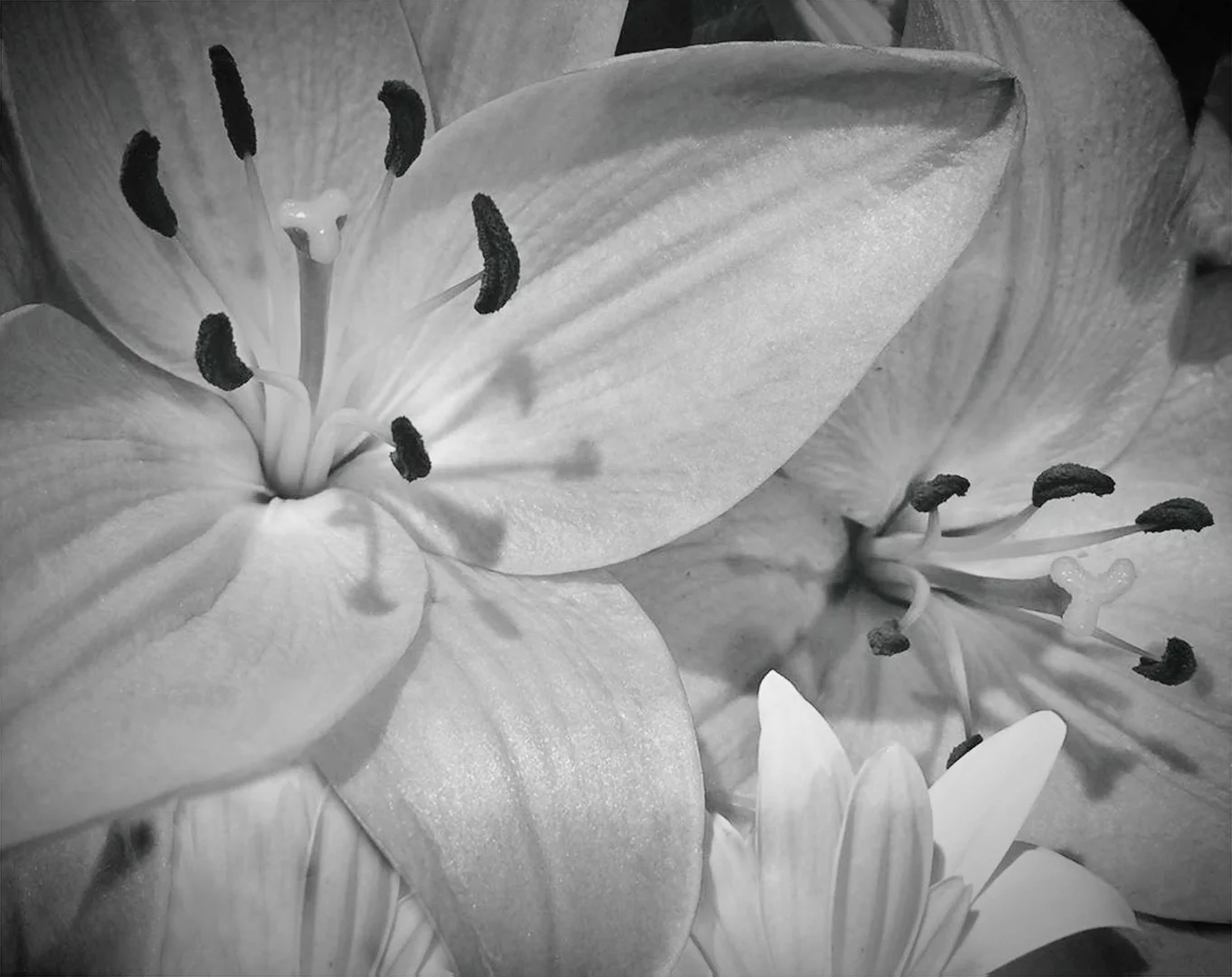
Monochrome Lilies
This is a classic attempt at a black and white botanical study, relying on the strong natural shapes of the lilies, though the execution limits its impact.
What's working
- ✓The choice to convert to black and white emphasizes the graphic shapes of the stamens and petals.
- ✓Focus is appropriately placed on the central reproductive structures of the primary flower.
Room to grow
- The framing is uncomfortably tight, awkwardly cutting off the top anthers and crowding the edges.high
- Harsh, direct lighting creates distracting, hard-edged shadows of the stamens across the petals.high
- The black and white conversion lacks tonal contrast, resulting in a muddy, mid-grey appearance.medium
- Visible digital noise across the smooth surfaces of the petals detracts from the delicate subject.medium
Category Scores
✓ The primary lily is positioned to dominate the left side of the frame.
→ The crop is too tight, severing the top-left anthers and leaving no breathing room.
✓ The light source is strong enough to highlight the texture on the anthers.
→ The light is harsh and directional, casting hard, distracting shadows of the stamens onto the petals.
✓ The monochrome palette successfully removes color distractions to focus on form.
→ The tonal range is compressed into the midtones, lacking crisp whites or deep, anchoring blacks.
✓ The image conveys a basic sense of stillness.
→ The clinical framing and flat tones prevent the image from evoking a strong mood or atmosphere.
✓ The core of the main lily is in acceptable focus.
→ Noticeable digital noise is present throughout, particularly in the midtone petals, reducing image quality.
✓ Abstracting the flower through monochrome is a valid creative choice.
→ This is a very conventional approach to a common subject without a distinct authorial voice.
Your Action Plan
TOP ACTIONS
- 1Reshoot with a wider framing to give the subject breathing room and avoid cutting off key elements.
- 2Diffuse your light source to eliminate harsh shadows and create softer transitions on the petals.
- 3Lower your ISO to reduce digital noise and improve overall image clarity.
Need some inspiration?
Your style reminds me of...
Imogen Cunningham
Study her iconic black and white botanical photography. Notice how she used precise lighting to reveal form and texture, and how her compositions were meticulously balanced within the frame.
Like what you see?